Testing Watercolor Succulent Tumbler Graphics for Print Templates
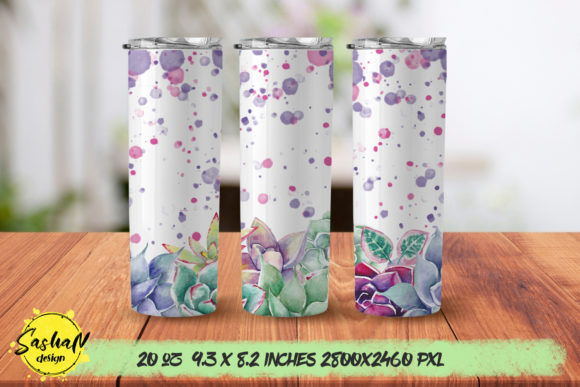
When I first opened the file for this watercolor succulent tumbler design, my immediate reaction was that it lands in a sweet spot between botanical elegance and casual handmade charm. The brushwork feels loose and organic, with soft green gradients bleeding into subtle blue-green shadows, and the petal forms have that characteristic translucent layering that makes watercolor assets so appealing for product creation. This is not a hyper-realistic succulent illustration. It leans decorative, with a painterly texture that reads well at the scale of a tumbler wrap or a printed greeting card. The mood sits somewhere between a modern farmhouse aesthetic and a gentle bohemian plant-lover vibe, which is a niche that continues to perform consistently across Etsy, Creative Fabrica, and print-on-demand storefronts.
What I look for in a graphics asset before committing it to a product lineup is whether the visual personality can carry a listing on its own. A succulent-themed design like this has built-in audience alignment. Plant enthusiasts, succulent collectors, and buyers searching for nature-inspired home decor or gift items will recognize the motif immediately. The question is whether the execution holds up under scrutiny. In this case, the watercolor rendering is clean enough to feel intentional but loose enough to avoid looking like a mass-produced vector trace. That balance matters when you are positioning a product in a crowded marketplace where buyers can spot generic clipart from a mile away.
The product description states clearly that this is a complete PNG file, not an SVG cutting file. That is a crucial distinction for anyone selling in the Cricut, Silhouette, or physical craft space. A PNG means you are working with a flat raster image, not a layered or cut-ready vector. The designs are described as seamless, and the download includes one design delivered as two digital files, both at 300 DPI in high resolution. This is standard for print templates and digital download products, but I always verify the actual pixel dimensions before building a product around an asset. A 300 DPI file that measures only a few inches across will not scale well for a physical tumbler wrap, let alone a larger print product. The resolution needs to be generous enough to accommodate at least a 9.3-inch by 8.2-inch straight tumbler template at full print quality, and ideally more for sublimation bleed.
Evaluating the Watercolor Succulent Style for Marketable Niches
Succulents as a design theme have remarkable staying power. They cross over between wedding stationery, home office decor, self-care products, and seasonal spring and summer collections. The watercolor treatment pushes this asset into a softer, more artisanal territory. I can see it functioning well in a printable wall art set for a bathroom or sunroom, a thank-you card design, a journal cover, or a set of planner stickers. The tumbler application is the primary framing, but any experienced digital seller knows that a single well-chosen graphic can spawn multiple product types if the licensing allows it.
From a commercial perspective, the watercolor succulent tumbler design works best when it serves as the hero element of a product rather than a supporting accent. The painterly texture and color variation demand visual space. I would not shrink this down to a tiny corner accent on a text-heavy Canva template. The brushwork loses its impact below a certain size, and the subtle color shifts that make watercolor appealing become muddy when reduced too far. This is a consideration for anyone thinking about sticker sheets, tiny labels, or icon sets. The asset is better suited to larger applications where the brushstrokes and color blending can breathe.
Practical Product Applications and Testing Scenarios
Before I list any graphic design asset in my shop, I run it through a series of practical tests. For this watercolor succulent design, the first stop is always a tumbler mockup. I place the PNG on a straight stainless steel tumbler template, check the wrap alignment, and evaluate how the seamless pattern repeats if the design is meant to be tiled. The seamless quality mentioned in the product description is important. A poorly executed seamless pattern will show visible breaks or awkward repetition artifacts, which tank the perceived value of a finished product. In my testing, I look at the pattern repeat at full mockup resolution, zooming in to inspect the edges where the design meets itself. A seamless watercolor pattern is technically more challenging than a vector repeat because the organic textures can create visible lines if not handled carefully.
Beyond tumblers, I test the same PNG on a mug template, a tote bag mockup, a greeting card layout, and a simple printable wall art frame. The watercolor succulent tumbler design adapts well to products that benefit from a soft, hand-painted aesthetic. On a white ceramic mug, the greens feel fresh and clean. On a kraft paper greeting card background, the design takes on a more rustic, earthy character. On a tote bag, the watercolor texture gives the impression of a hand-printed item, which can support a higher price point in a handmade business context.
For print-on-demand sellers, the 300 DPI resolution is non-negotiable. I check the file's actual pixel dimensions against the requirements of Printful, Printify, and similar platforms. A tumbler wrap typically needs around 2700 by 2400 pixels at minimum for sharp output. If the PNG file falls short, I can sometimes upscale it carefully, but that introduces risks of softening the watercolor texture. I would rather start with a file that meets or exceeds the platform specifications from the beginning.
Where This Asset Shines in a Digital Product Collection
This watercolor succulent design performs exceptionally well in product categories where the visual softness of watercolor is an asset rather than a limitation. Printable wall art is an obvious fit. A single succulent illustration framed in a clean layout with a simple serif font caption can become a bestselling digital download in the home decor category. Similarly, the design works beautifully for invitation templates, particularly for bridal showers, garden parties, or botanical-themed weddings. The watercolor texture communicates a sense of craftsmanship that aligns with premium invitation pricing.
Social media templates and blog graphics also benefit from this type of asset. Bloggers and content creators in the lifestyle, wellness, and home decor niches frequently seek soft botanical graphics to use as post backgrounds, Pinterest pins, or quote card elements. The watercolor succulent tumbler design, when cropped or framed thoughtfully, can serve as an elegant backdrop for text overlays. The key is allowing the brushwork to remain visible without competing with the message.
Another strong application is product bundling. If I were building a succulent-themed digital download bundle for a seasonal shop update, this design would anchor the collection. I would pair it with coordinating watercolor elements like eucalyptus sprigs, terracotta pots, or soft geometric backgrounds. Bundles increase average order value, and a strong hero graphic makes the entire bundle listing more appealing in thumbnail form. The watercolor succulent tumbler design has enough visual weight to perform that role effectively.
Limitations and Cautions for Crafters and Sellers
Despite its strengths, this asset is not universally applicable. The most significant limitation is the PNG format. Cricut and Silhouette users who expect an SVG cutting file will be disappointed. The description is upfront about this, but sellers who plan to market this as a cutting design need to be equally clear in their own product listings. A PNG can still be used in Cricut Design Space as a print-then-cut image, but the cutting path follows the outer boundary of the printed area rather than intricate cut lines around individual succulent leaves. This limits the design's usefulness for vinyl decals, layered paper crafts, or any project requiring precise contour cutting.
Another practical consideration is color accuracy. Watercolor digital files can look different on screen versus in print. The soft greens and subtle gradients may print darker or with less contrast on certain home printers. I always test print a swatch on matte paper and glossy paper before finalizing a product listing. If the colors shift significantly, I adjust my printer settings or note the expected variance in the product description. For sublimation, the colors can also shift during the heat transfer process, so testing on a blank tumbler is essential before selling the finished product.
The design also requires careful handling on dark backgrounds. Watercolor textures typically have some transparency and soft edges, which can look washed out or disappear against black or navy. I test the PNG on a dark mockup to see if the succulent forms hold their shape. If they fade too much, I restrict the product listings to light or neutral backgrounds. This is not a flaw, just a practical constraint of the watercolor medium in digital form.
Presentation and Thumbnail Strategy for Etsy and Creative Marketplaces
The way a graphic design asset is presented in a listing thumbnail can make or break its sales performance. For this watercolor succulent tumbler design, I would stage the main thumbnail with a realistic tumbler mockup showing the full wrap. The soft greens pop best against a light, airy background with natural props like a linen cloth, a small actual succulent plant, or a wooden surface. The goal is to help the buyer visualize the finished product immediately. A flat digital file preview does not convert as well as a lifestyle mockup that tells a story.
In the listing images, I would include multiple product applications. A tumbler mockup, a framed print mockup, a greeting card flat lay, and a phone case preview all help the buyer see the design's versatility. I also include a close-up of the watercolor texture to communicate the quality of the brushwork. Buyers who understand the value of hand-painted aesthetics will respond to those details. A zoomed-in section showing the color blending and paper texture simulation can justify a higher price point compared to flat vector alternatives.
The file organization for customers should be clean and intuitive. Even though the download includes only two files, I would name them clearly and include a simple text file with usage ideas and a reminder about commercial licensing terms. This small touch reduces customer confusion and support requests, which matters when you are managing a growing digital product shop.
Font Pairing and Brand Consistency Notes
When incorporating this watercolor succulent design into templates, the font pairing significantly affects the overall mood. A soft serif font like Playfair Display or Cormorant Garamond reinforces the elegant botanical feel, making it suitable for wedding stationery or premium printables. A clean sans serif font creates a more modern, minimalist look that works for social media graphics or contemporary wall art. A casual handwritten script font leans into the handmade, personal vibe, which is ideal for thank-you cards, gift tags, or small business branding. I would avoid heavy display fonts that compete with the delicacy of the watercolor brushwork. The graphic needs typographic breathing room.
For sellers building a cohesive brand identity, this asset fits naturally into a collection that emphasizes organic textures, muted greens, and botanical themes. If your shop aesthetic is bright, bold, or highly graphic, this watercolor design may feel out of place. Consistency across your product catalog builds buyer trust, so I evaluate each new asset against the existing visual language of my shop before adding it to the lineup.
Commercial Licensing and Final Seller Considerations
Before selling any product created with a purchased graphic design asset, I verify the commercial license terms. The watercolor succulent tumbler design is marketed as a commercial-use asset, but the specific terms matter. Can I sell finished physical products like printed tumblers and mugs? Can I sell digital products like printable wall art or Canva templates that include the design? Are there restrictions on print-on-demand usage or the number of end products I can sell? These questions are fundamental to avoiding licensing issues down the line. I always keep a record of the license terms and the original purchase receipt.
The file specifications, one design delivered as two digital files at 300 DPI in PNG format, are adequate for most print templates and digital download products. The seamless quality is a significant advantage for wrap-around products like tumblers and mugs. The watercolor texture adds a layer of perceived value that flat vector graphics cannot match. However, the lack of an SVG cutting file limits the craft applications, and the raster format means scaling up beyond the original resolution should be done cautiously.
For Etsy sellers, Creative Fabrica contributors, and print-on-demand entrepreneurs, this watercolor succulent tumbler design is a solid addition to a botanical or nature-inspired product collection. It performs best in hero-image roles on larger products, requires testing across backgrounds and print methods, and benefits from thoughtful mockup presentation. The succulent niche remains commercially viable, and the watercolor treatment gives this asset a distinctive handcrafted quality that resonates with buyers seeking something beyond generic clipart. As with any graphics investment, the return comes from how carefully you test, position, and present the final products.